State-Level AI Regulations Are Here: What Small Businesses Need to Know for Compliance
As states like Illinois, Connecticut, and California roll out new AI legislation and executive orders, small business owners must understand the direct impact on HR decisions, data security, and the urgent need for proactive compliance in a rapidly evolving regulatory landscape.
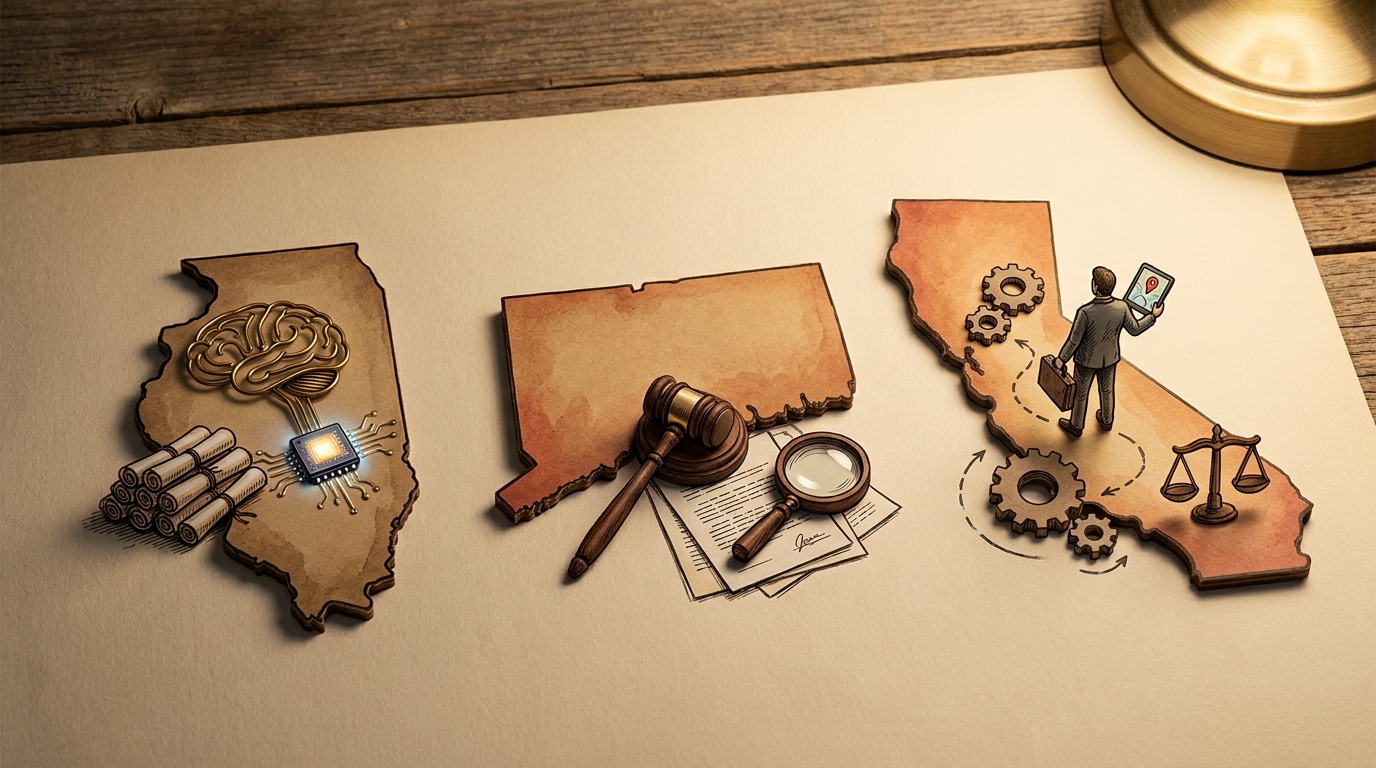
State governments are rapidly enacting AI legislation and executive orders, creating a new and complex compliance environment that directly impacts how small businesses operate, particularly concerning human resources, data security, and the responsible adoption of artificial intelligence tools.
- Illinois passed SB 315, a landmark AI safety bill requiring annual third-party audits and risk plans for frontier AI companies, setting a potential national precedent.
- Connecticut's new AI law restricts employer use of AI in employment decisions and mandates disclosures for AI-related reductions in force (RIFs), effective October 1, 2026.
- California's Executive Order N-6-26 initiates research into AI's labor market impacts and potential updates to the Worker Adjustment and Retraining Notification (WARN) Act.
- These state-level actions highlight a growing national trend, requiring small businesses to proactively review their AI usage, HR policies, and data governance strategies.
- Compliance is becoming critical for small businesses utilizing AI, with specific mandates impacting employment practices and emphasizing data security and responsible AI deployment.
The regulatory landscape for artificial intelligence is rapidly evolving at the state level, marking a critical shift that small businesses can no longer afford to ignore. Recent legislative actions and executive orders in states such as Illinois, Connecticut, and California are setting new precedents, demanding that business owners reassess their AI usage, HR policies, and data security protocols to ensure compliance.
Illinois has taken a significant step with the passage of SB 315, a pioneering AI safety bill. While primarily targeting “frontier AI companies” by mandating the development of risk plans and annual independent third-party audits, this legislation has broader implications. Small businesses that develop or heavily rely on advanced AI models — including those provided by larger frontier AI companies — will indirectly face increased pressure for responsible AI practices. The bill also establishes whistleblower protections, reinforcing a growing call for transparency and accountability in AI development and deployment.
Further south, Connecticut has enacted a landmark AI law that directly impacts small employers. Governor Ned Lamont signed bipartisan legislation that restricts employers' use of AI in employment decisions. This includes functions like hiring, performance evaluations, and promotions. Crucially, the law also requires disclosures for AI-related reductions in force (RIFs), ensuring employees are informed when AI plays a role in job eliminations. Small business owners in Connecticut must familiarize themselves with these new regulations, which begin taking effect on October 1, 2026, to ensure their HR practices remain compliant and avoid potential legal ramifications.
On the West Coast, California Governor Gavin Newsom has issued Executive Order N-6-26, mandating state agencies to conduct comprehensive research into AI’s labor market impacts. The order specifically calls for exploring best practices and potential updates to the Worker Adjustment and Retraining Notification (WARN) Act for AI-related layoffs. While not immediately a direct compliance mandate, this executive order signals a strong likelihood of future policy changes that will affect small businesses' human resources strategies, hiring, and obligations during workforce transitions prompted by AI adoption.
These state actions underscore a broader national trend towards regulating AI, impacting critical areas such as data security and governance. For instance, new security vulnerabilities in AI chatbots exploiting conversational design have been identified, underscoring the need for robust security measures for small businesses using these tools Source 3: New AI Chatbot Security Vulnerability Exploits Conversational Design. Similarly, increased investment in AI-native identity verification and AI agent security platforms highlights the growing industry focus on protecting against deepfakes and ensuring data integrity Didit Raises $7.5 Million Seed to Build AI-Native Identity Verification, and Geordie AI Secures $30 Million Series A Funding for AI Agent Security. Small businesses must proactively audit their current AI applications, update HR policies, and bolster data governance frameworks to navigate this complex and evolving regulatory environment successfully. Proactive compliance is no longer optional; it is a necessity for mitigating risks and sustaining operations.
Weekly digest
The Sunday Brief — AI for small business in 5 minutes
Plain-English roundup of the week's most useful AI tools and tactics. Join free. Unsubscribe anytime.
Frequently Asked
How do these new state AI laws directly affect my small business's HR practices?
Connecticut's new law directly impacts HR by restricting the use of AI in employment decisions and requiring disclosures for AI-related layoffs, effective October 1, 2026. California's executive order signals potential future changes to labor laws concerning AI-related workforce transitions. Small businesses should review their AI tools used in hiring, evaluations, and workforce planning to ensure compliance and prepare for future mandates.
What steps should my small business take to prepare for these AI regulations?
Small businesses should begin by auditing all AI tools currently in use, especially those impacting HR, data processing, and customer interactions. Review and update internal policies, particularly those related to data governance and employee privacy. For businesses in affected states, consult legal counsel to understand specific compliance requirements and deadlines, such as Connecticut's October 1, 2026, effective date.
Are there specific deadlines I need to be aware of for AI compliance?
Yes, for small businesses operating in Connecticut, the new AI law restricting employer use of AI in employment decisions and mandating RIF disclosures begins taking effect on October 1, 2026. While Illinois's SB 315 primarily targets frontier AI companies, its standards may influence responsible AI practices that could indirectly affect small businesses. California's Executive Order sets the stage for future policy changes, so monitoring developments is key rather than a fixed deadline.
Discussion
No comments yet. Be the first to share your thoughts.
Leave a comment
All comments are reviewed before publishing. Plain-English discussion only — no spam, no promotional links.