12 Home Solar Myths SMB Owners Must Debunk to Save Money
Don't let these common misconceptions about solar power keep you from significant savings and energy independence for your business.
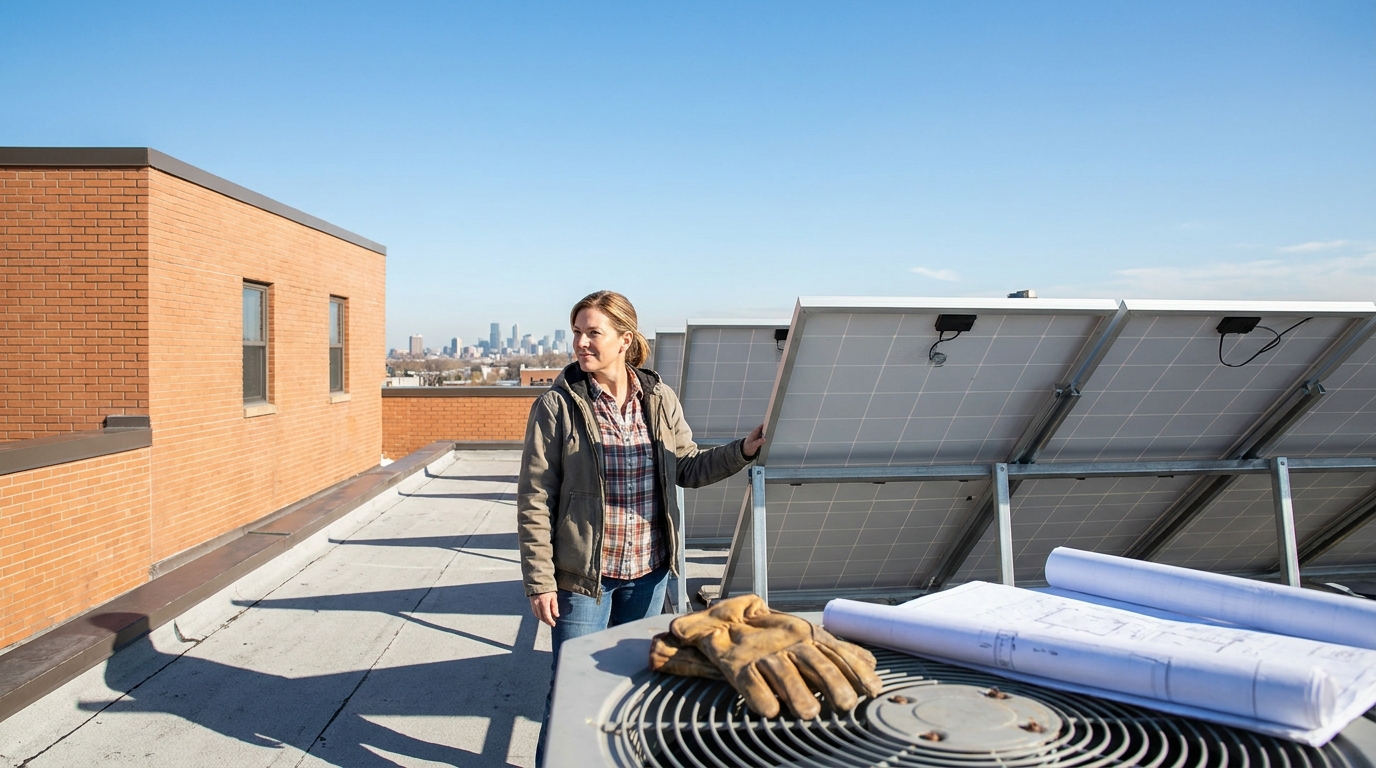
Solar power is more affordable, reliable, and low-maintenance than many small business owners believe. Misconceptions about high upfront costs, weather dependency, and complex upkeep often prevent owners from accessing significant long-term savings and energy security for their home-based or small commercial operations.
- Solar is more affordable than you think due to falling costs, tax credits, and financing options.
- Modern panels are highly efficient and produce significant power even in cloudy, overcast, or cold climates.
- Solar panels are durable, require minimal maintenance, and a proper installation will not damage your roof.
- Pairing solar panels with a battery storage system can keep your business running during a power outage.
- Going solar can increase your property value and make it more attractive to future buyers.
- Your installer will handle all the complex permitting and paperwork with your city and utility company.
Why Solar Matters for Your Small Business
As a small business owner, you're constantly watching the bottom line. Rising and unpredictable energy costs can eat into your profits, making financial planning a challenge. Solar power offers a solution by providing predictable energy expenses, significant long-term savings, and a tangible way to demonstrate your commitment to sustainability. Many owners hesitate, held back by outdated information. This guide cuts through the noise to give you the facts.
12 Common Home Solar Myths Debunked
Making an informed decision starts with debunking common myths. Here are the realities behind the 12 most persistent misconceptions about solar power.
Myth 1: Solar is too expensive upfront.
Reality: While there is an initial investment, costs have fallen over 80% in the last decade. More importantly, federal tax credits (like the 30% Residential Clean Energy Credit), state incentives, and local rebates can drastically reduce the net cost. Many installers also offer solar loans or leases, allowing you to start saving from day one with little to no money down. The key is to evaluate the long-term return on investment (ROI), not just the initial price tag.
Myth 2: Solar doesn't work well in cloudy or cold regions.
Reality: Modern solar panels are highly efficient and generate power even on overcast days. Germany, a global leader in solar energy, has a climate similar to Alaska. While direct sunlight is optimal, today's panels capture a wide spectrum of light. For regions with heavy snow, the dark surface of the panels often helps snow melt and slide off faster.
Myth 3: Solar panels require constant, high-cost maintenance.
Reality: Solar panels are remarkably durable and require very little upkeep. They have no moving parts and are designed to withstand harsh weather. Most owners only need to rinse them with a hose once or twice a year to clear off dust or pollen. Many solar installers offer monitoring apps to ensure your system is performing as expected, alerting you to any issues.
Myth 4: You lose power during grid outages with solar.
Reality: This is only partially true for standard grid-tied systems. For safety reasons, these systems automatically shut down during a grid outage to prevent sending power back to the lines where workers may be making repairs. However, pairing your solar panels with a battery storage system allows you to keep your lights on and business running using the energy you've stored.
Myth 5: Solar panels will damage my roof.
Reality: When installed by a reputable and certified professional, solar panels actually protect the portion of the roof they cover. Installers conduct a thorough assessment to ensure your roof can support the system. They use specialized mounting hardware with flashing and sealants to prevent leaks, and the work is typically covered by a warranty.
Myth 6: Solar is only for large properties or businesses.
Reality: Solar is highly scalable. Whether you run a business from a small home office or a dedicated workshop, a system can be designed to fit your specific energy needs and available roof space. The key is to match the system size to your electricity consumption, making it a viable option for even the smallest of businesses.
Myth 7: Solar panels make it harder to sell a property.
Reality: The opposite is often true. Studies have shown that homes with solar panels can sell faster and for a higher price than comparable homes without them. A solar installation is seen as an upgrade that provides the new owner with lower electricity bills, which is a powerful selling point in any market.
Myth 8: Solar technology changes too fast; it's better to wait.
Reality: While solar technology is always improving, the advancements are now more incremental than revolutionary. Today's panels are mature, efficient, and reliable, with 25- to 30-year warranties. Waiting for the "next big thing" means missing out on years of significant savings. The current technology offers a fantastic ROI right now.
Myth 9: Grid-tied systems make you completely energy independent.
Reality: A standard grid-tied system without battery storage does not make you independent. You are still connected to the utility grid. This is beneficial because of "net metering," where you can sell excess power you generate back to the utility, often for a credit on your bill. It provides reliability without the higher cost of a completely off-grid setup.
Myth 10: Batteries are always a necessary component for solar.
Reality: Batteries are an excellent addition but aren't necessary for every situation. If your primary goal is to reduce your monthly electricity bill in an area with reliable grid service and good net metering policies, you can achieve that with a grid-tied system alone. Batteries are essential if your goal is to have backup power during outages.
Myth 11: Permits and regulations are too complex for an SMB owner.
Reality: Navigating permits can seem daunting, but you don't have to do it alone. Your solar installer handles the entire process as part of their service. They manage all the necessary paperwork, inspections, and approvals from your local municipality and utility company, streamlining the project from start to finish.
Myth 12: Solar panel production is not environmentally friendly.
Reality: While manufacturing any product has an environmental footprint, the lifecycle analysis of solar panels shows they are a net positive for the environment. The energy "payback" time—the time it takes for a panel to generate the amount of energy used to produce it—is typically less than two years (ZDNET, 2026). Over a 30-year lifespan, a solar panel will generate far more clean energy than was used in its creation.
How to Evaluate Solar for Your Small Business: A Step-by-Step Guide
- Analyze Your Energy Consumption. Gather your last 12 months of electricity bills. Identify your average monthly kilowatt-hour (kWh) usage and note the total cost. This data is the foundation for sizing your system and calculating potential savings.
- Get a Professional Site Assessment. Contact a North American Board of Certified Energy Practitioners (NABCEP) certified solar installer. They will evaluate your roof's age, condition, orientation, and any potential shading from trees or other buildings to determine its suitability for solar.
- Request and Compare Multiple Quotes. Don't take the first offer. Use a service like the EnergySage Marketplace or contact at least three highly-rated local installers to get competing quotes. Compare the proposed system size, panel and inverter brands, warranties, and total cost.
- Explore Incentives and Financing. Use the Database of State Incentives for Renewables & Efficiency (DSIRE) to find every available federal, state, and local incentive. Ask installers about financing options, like a solar loan, which can often result in a monthly payment lower than your current electric bill.
- Review the Contract and Choose Your Installer. Read the proposal carefully. Ensure it includes a clear timeline, payment schedule, equipment list, and warranty information. Choose a licensed and insured installer with a strong track record of successful local installations.
Real-World Scenario: A Home-Based Catering Business
Maria runs a catering business from her home, and her commercial-grade ovens and refrigerators meant her monthly electricity bills often topped $500. Worried about rising utility rates, she followed the steps above. An assessment showed her south-facing garage roof was a perfect spot for panels. After getting three quotes, she chose a 10kW system. A 30% federal tax credit and a state rebate lowered her net cost significantly. Today, her system covers over 90% of her energy needs, and her monthly bill is often just the base connection fee from the utility.
Common Mistakes to Avoid
- Choosing on Price Alone: The cheapest quote may use lower-quality equipment or reflect inexperienced labor. Focus on the best long-term value, not just the lowest initial cost.
- Not Vetting Your Installer: A poor installation can lead to leaks and underperformance. Check licenses, read reviews, and ask for references from previous customers.
- Misunderstanding Net Metering: Policies vary by utility. Understand exactly how you will be credited for the excess power you send to the grid, as this is crucial for calculating your ROI.
- Ignoring Your Roof's Condition: Installing a 25-year solar system on a 20-year-old roof is a mistake. Address any roof repairs or replacement before the solar installation.
Conclusion: Make Your Decision on Facts, Not Fiction
For small business owners, separating myth from reality is key to unlocking the financial and operational benefits of solar power. By understanding the true costs, capabilities, and requirements of a solar system, you can make a strategic investment that lowers overhead, provides energy security, and strengthens your business for the future. The next step is to get a professional, no-obligation assessment to see what solar can do for you.
Weekly digest
The Sunday Brief — AI for small business in 5 minutes
Plain-English roundup of the week's most useful AI tools and tactics. Join free. Unsubscribe anytime.
Frequently Asked
How much does a typical solar installation cost?
The average cost for a residential solar panel system typically ranges from $15,000 to $25,000 before applying any tax credits or incentives. The final price depends on the system size, equipment quality, and your location.
Do I always need a battery with my solar panels?
Not necessarily. If your main goal is to reduce your monthly electricity bill and your utility offers good net metering, you may not need a battery. A battery is essential if you want to have backup power during grid outages or live in an area with poor net metering policies.
How long do solar panels last?
Most modern solar panels are built to last for 25 to 30 years and come with a performance warranty guaranteeing they will produce at a certain capacity (usually 80-90%) at the end of their warranty period.
What are the most important financial incentives for solar?
The main federal incentive is the Residential Clean Energy Credit, which provides a tax credit for 30% of the total system cost. Many states, local governments, and utilities also offer their own rebates, tax credits, or performance-based incentives.
Discussion
No comments yet. Be the first to share your thoughts.
Leave a comment
All comments are reviewed before publishing. Plain-English discussion only — no spam, no promotional links.